

When ad spend reaches substantial monthly levels, tracking infrastructure becomes a critical financial control. Research shows that technical limitations in browser-based measurement create systematic blind spots that distort customer acquisition economics. Ad blockers prevent approximately 45% of mobile client-side tracking pixels from firing, meaning a significant share of mobile visitors never appear in analytics platforms[1]. For brands with strong unit economics, this measurement gap compounds margin calculation errors and erodes confidence in acquisition decisions.
Tracking Leakage and Attribution Signal Loss
Browser-based tracking faces structural limitations that create consistent signal loss. Server-side tracking implementations recover 15–30% of lost conversion signals compared to browser-based tracking alone, due to bypassing ad blockers and privacy restrictions[2]. This recovery represents conversions that occurred but were invisible to standard measurement systems.
Privacy controls have systematically reduced opt-in rates. Apple's App Tracking Transparency and Google's third-party cookie sunset cut opt-in rates below 25% for Shopify merchants in 2025, requiring server-side tagging and consent platforms[3]. Additionally, 30–40% of users opt out of cookie tracking altogether under Consent Mode v2, systematically reducing the visibility of cross-channel journeys and attribution windows.
Device-level tracking has experienced similar degradation. IDFA (Identifier for Advertisers) access on iOS dropped from approximately 70% to roughly 10%, making device-level cross-device attribution significantly less reliable[1]. These technical constraints create measurement gaps that affect acquisition cost calculations and payback period estimates.
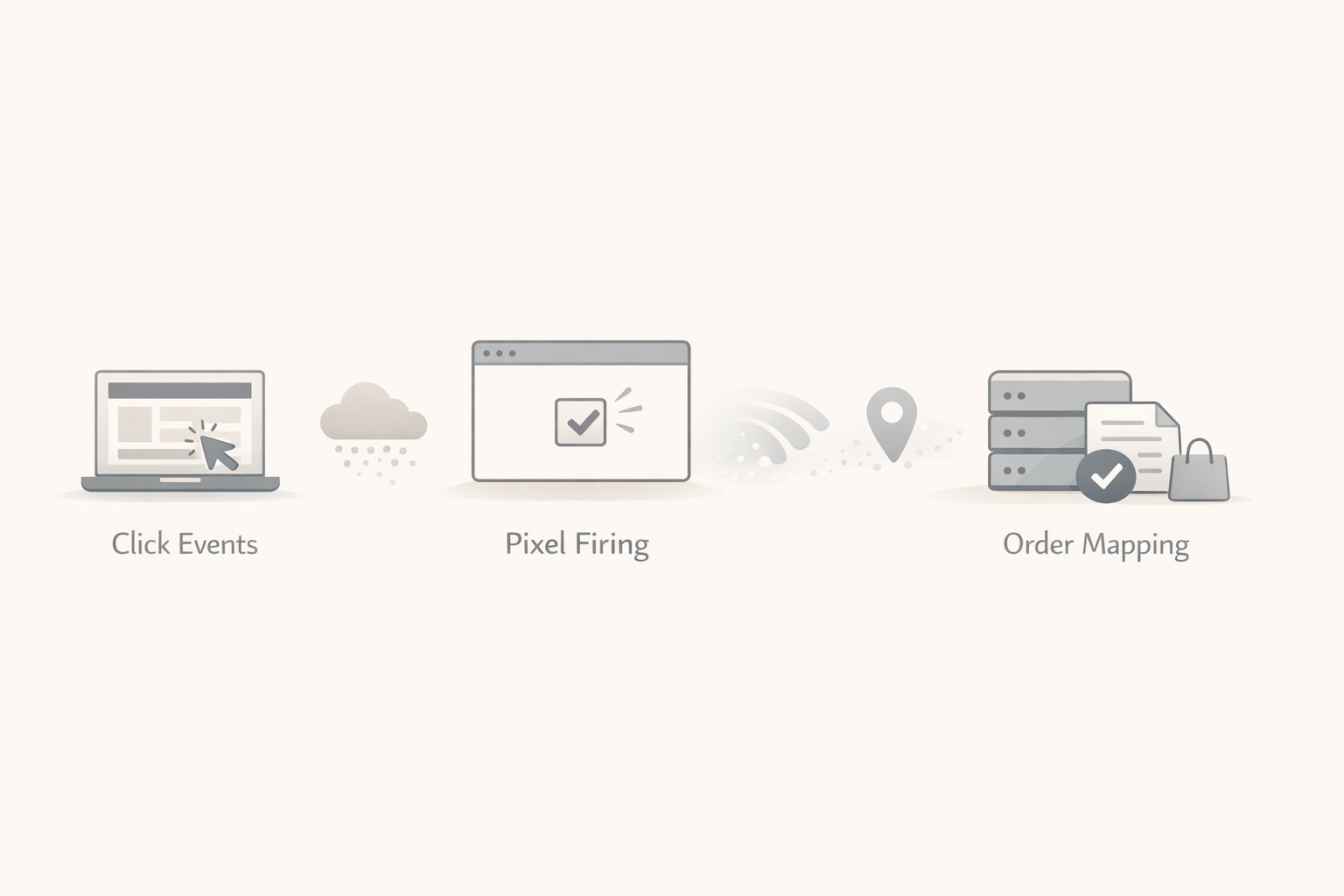
Illustration of where tracking signals are lost between click events and order mapping, showing the gap between browser-based pixel firing and server-side conversion capture.
Contribution Margin Distortion and Financial Blind Spots
At $10M–$20M revenue scale, contribution margin calculations require SKU- and channel-level visibility due to proliferation of promotions, multiple fulfillment partners, and zone-based shipping variation—blanket assumptions actively mislead decisions[4]. Standard dashboard reporting may not reflect the full cost structure that determines actual unit economics.
Shopify dashboards typically do not reflect delayed refunds, final shipping invoices, warehouse handling costs, negotiated carrier adjustments, and true platform fees after reconciliation, creating a false sense of margin accuracy[5]. These omissions compound as transaction volume increases.
Timing gaps create additional distortion. At $20M+ revenue scale, small timing gaps compound: refunds land weeks after the sale period, fulfillment invoices arrive after orders ship, and platform fees reconcile after reporting periods close[5]. This asynchronous cost recognition creates systematic overstatement of margin in real-time reporting.
The financial impact extends to the acquisition strategy. Inaccurate contribution margin calculations directly inflate Customer Acquisition Cost (CAC) payback period estimates, creating false confidence in acquisition efficiency and leading to premature spend scaling[5]. When the margin is overstated, payback appears faster than reality, which may encourage budget increases before unit economics can support them.
System fragmentation contributes to reconciliation delays. 63% of US retail chains operate at least three transaction systems lacking interoperability, delaying unified customer profiles and creating batch reconciliation delays that compound margin reporting errors[3]. For brands operating across multiple sales channels or fulfillment networks, this fragmentation makes real-time margin visibility difficult to achieve without manual reconciliation.
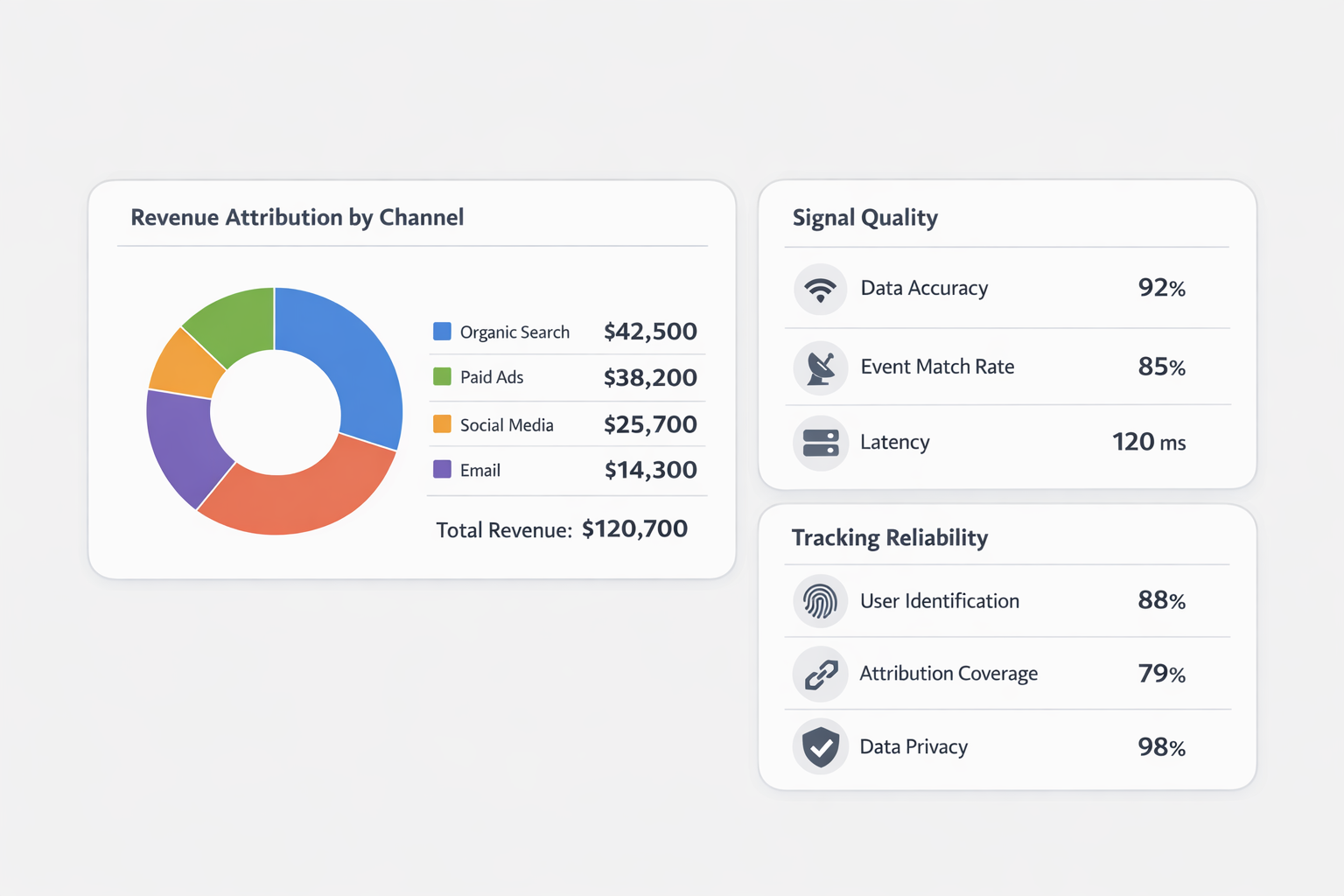
Example of a reporting interface displaying revenue attribution by channel alongside tracking quality metrics, illustrating how signal loss can be monitored alongside performance data.
Implementation Costs and Technical Requirements for Clean Rooms and Server-Side Tracking
Server-side conversion tracking via Google Tag Manager or custom endpoints requires initial infrastructure deployment on AWS, Azure, or Google Cloud, with resource allocation and custom domain configuration[6]. This infrastructure investment represents a shift from client-side measurement to server-controlled event capture.
Implementation involves parallel validation. Server-side tracking setup involves parallel testing with existing measurement methods and requires API credential configuration for each advertising platform (Google Ads, Meta, TikTok). During the testing period, both measurement systems run concurrently to validate signal accuracy before cutover.
Retail media adoption for mid-market brands requires the capability to send event-level data (views, clicks, conversions) to platforms like The Trade Desk or native retail networks, necessitating clean data schemas and event taxonomy alignment. This data preparation is foundational for activating first-party audiences in privacy-preserving environments.
Effective clean room implementation requires establishing semantic consistency in margin definitions and cross-functional alignment so finance, marketing, and operations operate from the same economic reality[5]. Without shared definitions, different teams may calculate payback periods or contribution margins differently, leading to conflicting strategic recommendations.
Retail Media Partnerships and Data Access
Retail data partnerships offer an alternative activation path. THG Beauty partnered with The Trade Desk to democratize access to Cult Beauty and LOOKFANTASTIC customer segments on a self-serve basis, enabling advertisers to access event-level data and build custom segments without a retailer clean room[7]. This model allows brands to activate audiences based on purchase behavior without direct access to personally identifiable information.
The retail media category has experienced substantial growth. On-site advertising platforms generated USD 50 billion in global revenue in 2025, fueled by purchase-based targeting that links impressions to in-basket sales[3]. This revenue scale reflects advertiser demand for measurement environments where conversion events are directly observable.
Privacy-preserving data activation has demonstrated commercial traction. Kroger grew its advertiser base by 38% by activating anonymized loyalty data inside privacy-preserving clean rooms, demonstrating the commercial value of retail data access for mid-market activation[3]. This growth indicates that brands are willing to adopt new measurement frameworks when they offer improved signal quality.
Infrastructure providers have formalized joint offerings to lower technical barriers. Snowflake and Google Cloud formalized joint clean-room products in early 2026, enabling cross-dataset joins without exposing raw records and lowering technical barriers for retailers to activate first-party data[3]. These partnerships suggest that clean room technology is transitioning from custom implementation to standardized product offerings.
Practical Considerations for Mid-Market and Luxury Brands
For mid-market brands, the priority may be stabilizing measurement infrastructure before expanding attribution complexity. Consider starting with server-side tracking deployment to recover lost conversion signals, then establishing SKU-level margin reconciliation to ensure payback calculations reflect true unit economics. One approach is to implement a post-purchase survey that captures marketing source directly from customers, providing a validation layer independent of pixel-based tracking.
Luxury brands may prioritize data governance and customer experience protection. Clean data schemas and privacy-safe activation through retail partnerships or clean rooms can support customer lifetime value modeling without compromising brand positioning. Establishing cross-functional alignment on margin definitions ensures that acquisition decisions are grounded in shared financial reality rather than departmental assumptions.
Both segments benefit from creating a single reporting framework that reconciles revenue by channel with signal quality indicators. This transparency allows teams to distinguish between true performance changes and measurement drift, reducing the risk of strategic decisions based on incomplete data.
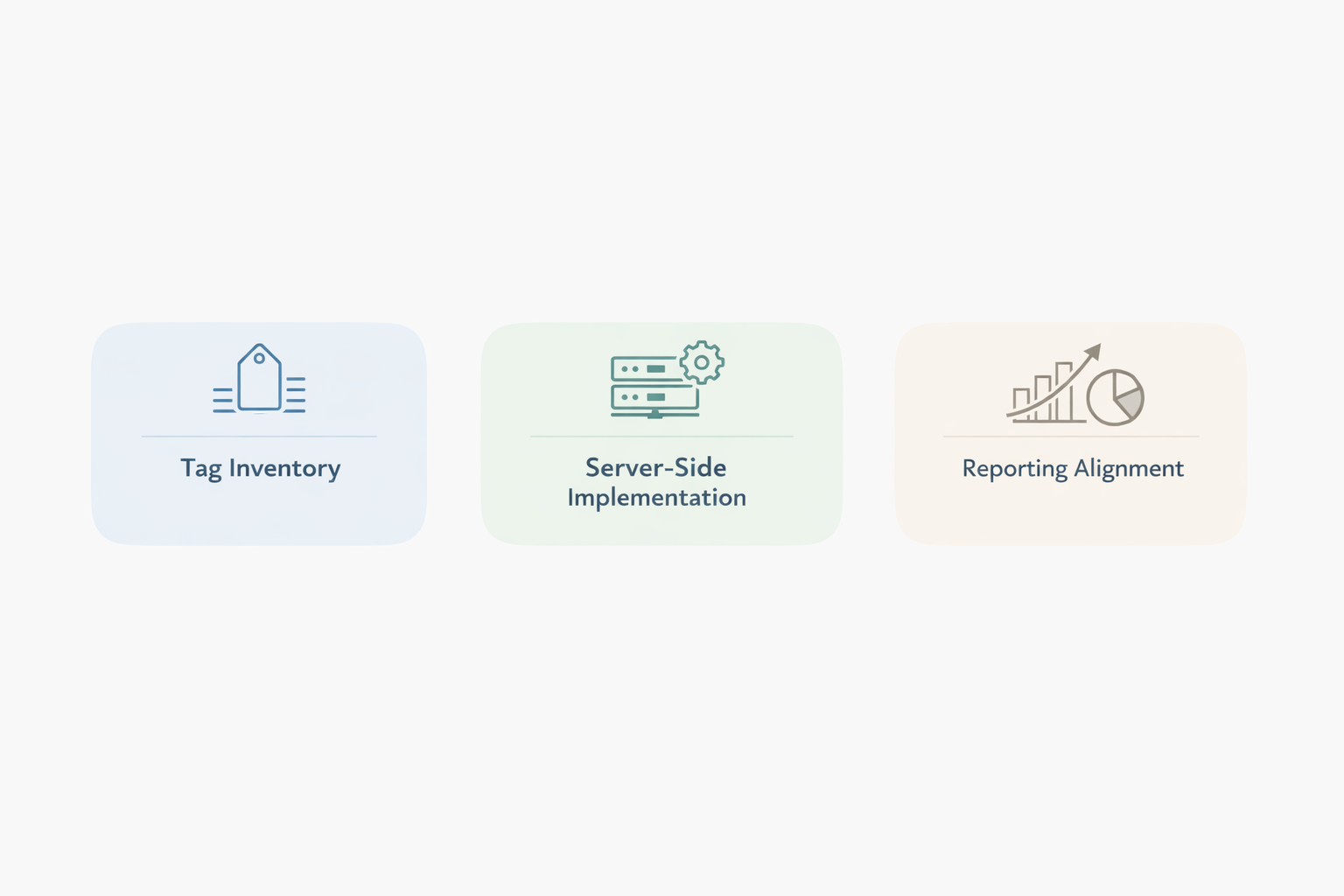
High-level representation of context areas in a tracking improvement initiative, including tag inventory, server-side implementation, and reporting alignment, without implying specific sequencing or duration.
Measurement infrastructure is a financial control, not a marketing optimization. When tracking leakage reaches the levels documented in current research, acquisition cost calculations become unreliable and payback period estimates diverge from cash reality. Consider starting with an audit of existing tracking infrastructure to quantify signal loss, then prioritize server-side implementation if browser-based measurement is missing a material share of conversions. Establish margin reconciliation at the order level to ensure contribution profit calculations reflect delayed refunds, final shipping invoices, and platform fee reconciliation. For brands exploring retail media or clean room activation, evaluate whether your current data schemas and event taxonomy can support event-level data transmission to external platforms. What is the single biggest gap between your reported CAC and the true, fully-loaded cost to acquire and fulfill a customer order?



SUBMIT YOUR COMMENT